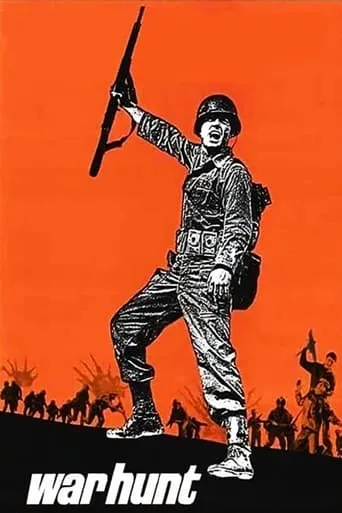
On April 24, 1951, following a rout of the South Korean army, the Chinese People Volunteer Army pursued their enemy to the lines of Australian and Canadian troops still digging fall-back defences, 39 kilometres to the rear. Here, sometimes at the length of a bayonet, often in total darkness, individual was pitted against individual in a struggle between a superpower and a cluster of other nations from across the world. They fought for a valley, the ancient and traditional invasion route to Seoul. If it fell the southern capital and the war, was lost. The United Nations troops had the military advantage of the high ground and artillery support: the Chinese relied entirely on vastly superior numbers. As a result, young men from both sides found a battle which was very close and very personal. The Battle of Kapyong became the turning point of China's Fifth Offensive in that Korea spring... Written by John Lewis
Direction
Smith blends grainy reenactments with haunting archival footage seamlessly.
Editing
Rapid cuts between darkness and explosions mirror sensory overload.
Sound
Napalm screams and bayonet clashes recorded with brutal clarity.
Director
Dennis K. Smith


Trivia, insights & behind the scenes
The reenactments were filmed in rural Victoria, Australia, with local Korean-Australian community members playing Chinese soldiers—many were descendants of actual combatants from both sides.
Kapyong remained virtually unacknowledged in Canadian public memory until 2011; the film's release directly prompted the Canadian government's 2013 official recognition of the battle as a national military milestone.



 AU
AU