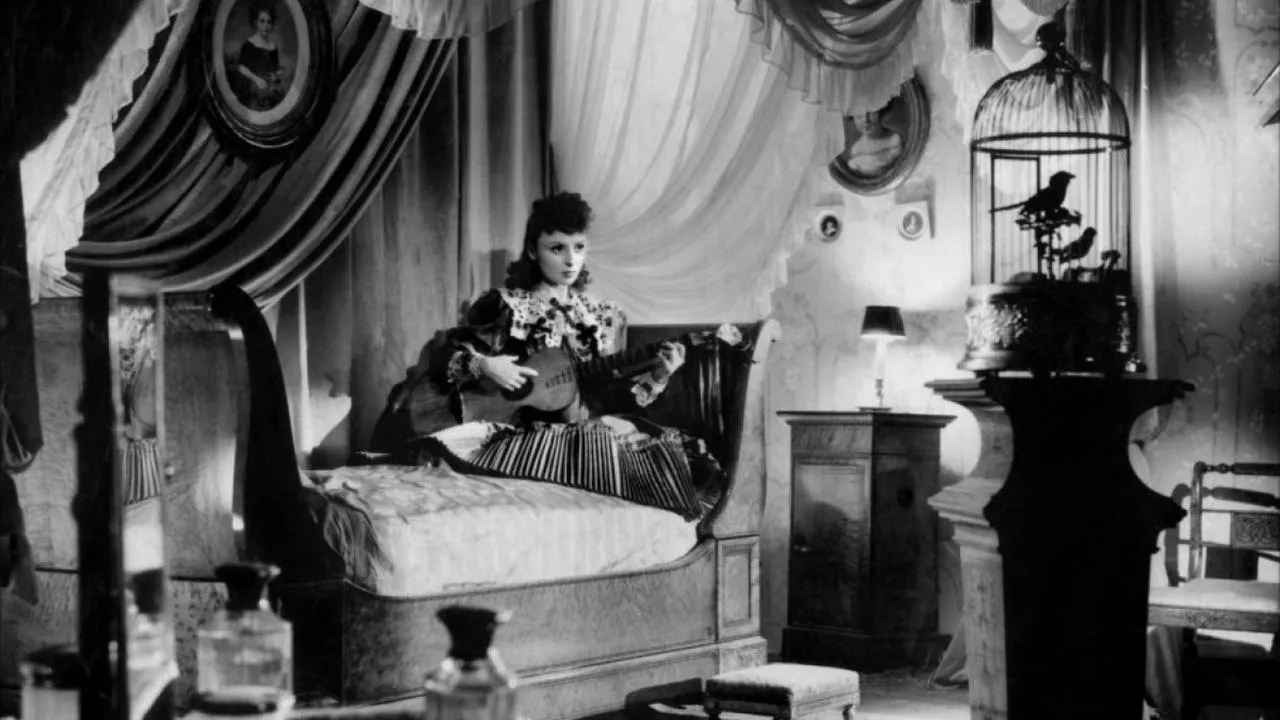
In Paris in 1887, Irène works as a governess to Douce, the grand-daughter of the dowager Countess de Bonafé. Douce believes she is in love with Fabien, the handsome manager of the estate. However she cannot hope to marry him because of their class difference. Douce's widowed father, the Count de Bonafé, has a wooden leg, and is infatuated with Irène. Douce discovers that Fabien is planning to flee to Quebec with Irène, and also finds out that the Count has asked Irène to marry him. So Douce tells Fabien this and convinces him to run away with her, causing consternation in the family.
Production
Lavish Belle Époque sets that breathe oppressive wealth.
Acting
Odette Joyeux's Douce: petulant, desperate, devastating.
Direction
Autant-Lara's camera lingers where propriety demands it look away.

Director
Claude Autant-Lara

Odette Joyeux
Douce

Roger Pigaut
Fabien Marani

Madeleine Robinson
Irène Comtat

Jean Debucourt
Engelbert de Bonafé

Marguerite Moreno
Madame de Bonafé

Richard Francœur
Julien

Gabrielle Fontan
Estelle

Louis Florencie
Groom

Paul Oettly
Priest

Georges Bever
Frotteur

Julienne Paroli
Old Thérèse

Roger Blin
Man of the theater (uncredited)
Trivia, insights & behind the scenes
Released during Nazi occupation, this opulent period drama was one of few French productions allowed—critics read its class critique as coded resistance.
The wooden leg was real: actor Jean Debucourt had lost his leg in WWI, making the Count's vulnerability physically, not prosthetically, authentic.




 FR
FR