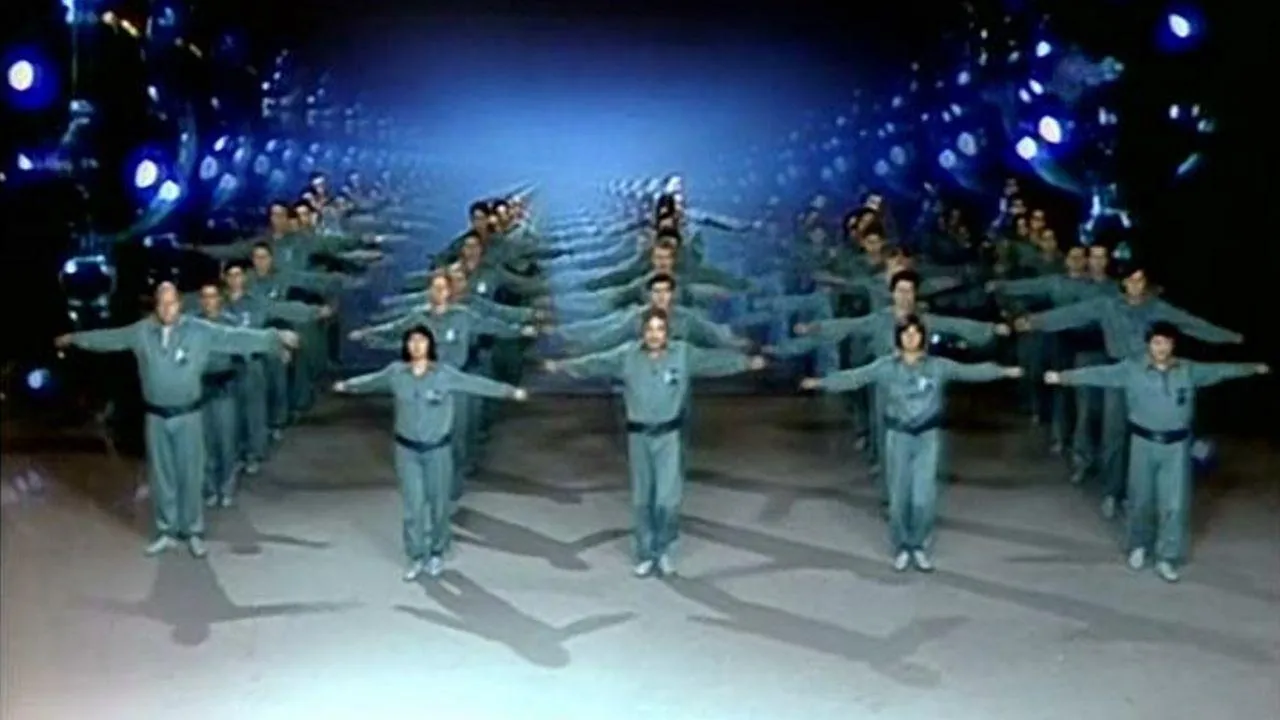

Glass houses, sex schedules, and the death of 'I' — Soviet-era sci-fi gets weird.
In the 26th century the inhabitants of Utopia have so lost their individuality, which varies in number. They live in glass houses (this was written before the invention of television), which allows the political police, called “Keepers” can easily supervise them. They all wear the same uniform and usually turn to each other or as a ”cipher-so” or "UNIFEM" (uniform). They feed on artificial food and rest hour marching in fours in a row the anthem of the One State, pouring out of the loudspeakers. As they are allowed to put a break on the hour (known as the ”sexy time“), draw the curtains of their glass houses. At the head of the One State is one called The Benefactor, which are replaced every year the whole population, usually unanimously. The guiding principle of the State is that happiness and freedom are incompatible.
Production
Brutalist glass architecture that predicts Instagram transparency culture.
Costume
UNIFEM uniforms so aggressively beige they become characters.

Director
Vojtěch Jasný
Trivia, insights & behind the scenes
Jasný fled Czechoslovakia after the Soviet invasion; this West German production became his forbidden love letter to dissent.
Zamyatin's 1921 novel was banned in USSR; this 1982 adaptation arrived as glasnost began, making it accidentally timely.


 DE
DE