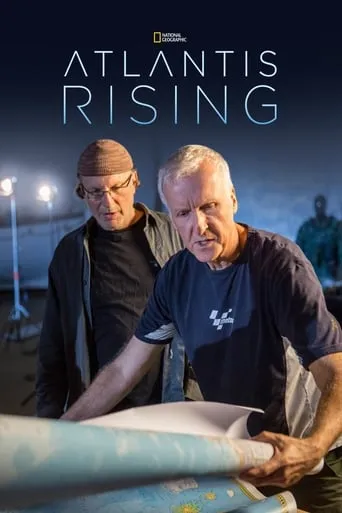
Using satellite photography, ground-penetrating radar and underwater technology, The film, Finding Atlantis, was screened by the National Geographic Channel in the US and fronted by Professor Richard Freund, from Hartford University in Connecticut. Professor Freund explained how he led a pursuit to find the lost civilisation, believed by many to be an ancient Greek myth, by using deep-ground radar, digital mapping and satellite imagery. He contends that Atlantis, described by Plato in 360BC, in Spain's Donaña National Park, north of Cadiz, and was wiped out by a giant tsunami. Plato wrote it had been destroyed by a natural disaster in 9,000BC. Experts are now surveying marshlands in Spain to look for proof of the ancient city.
Cinematography
Satellite imagery that makes mud look mysteriously beautiful
Direction
Ball builds genuine tension from academic press conferences
Writing
Plato quotes hit different when paired with ground-penetrating radar
Director
Graeme Ball

Trivia, insights & behind the scenes
Freund's team used magnetometry readings originally developed for Holocaust archaeology to detect buried structures beneath the Spanish wetlands.
The 2011 release coincided with a surge of 'ancient alien' programming, making Freund's rigorous methodology almost rebelliously academic by comparison.





 CA
CA US
US