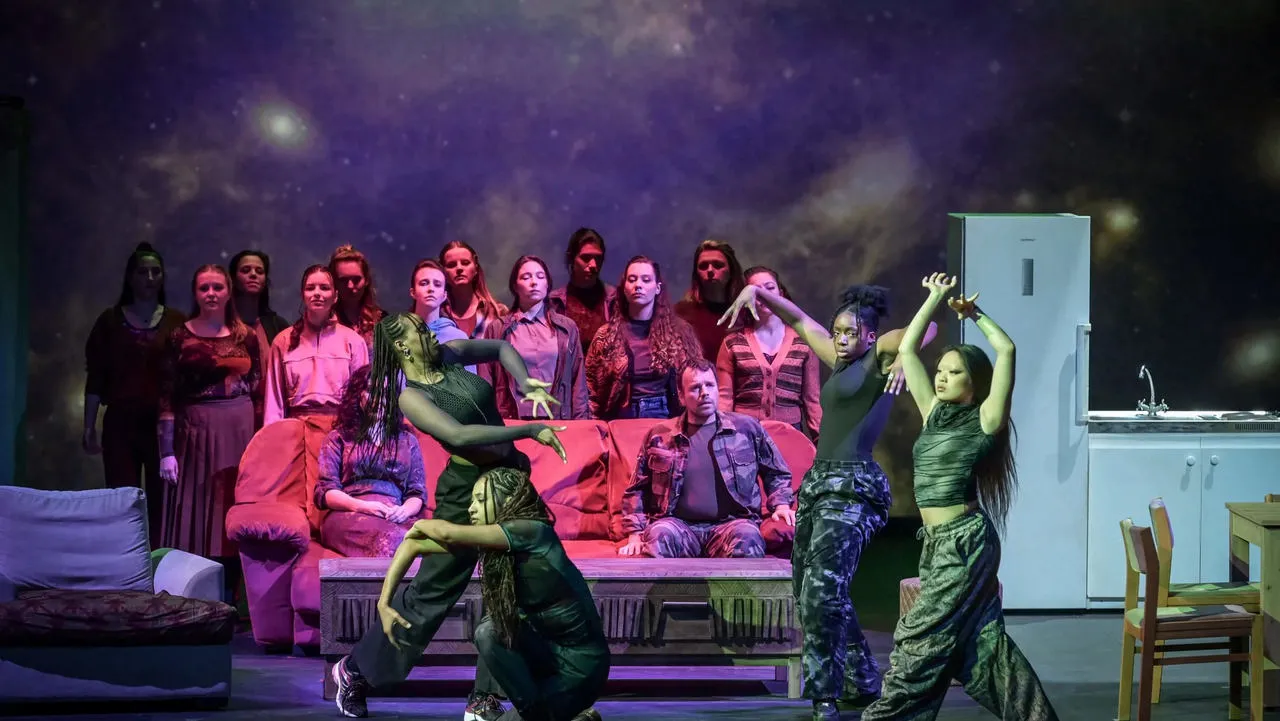

Ancient myth, modern rage: what if love could actually stop a war?
A return to its roots for Castor et Pollux, Jean-Philippe Rameau’s lyric tragedy first performed in 1737 at the Académie royale and inspired by the mythological episode of the Gemini. Rarely performed in its original version – the score was reworked by Rameau himself in 1754 –, this daring work plays on contrasts and expressiveness, as in the famous “Tristes apprêts”. The aria is sung by Télaïre mourning the death of her fiancé Castor, killed in battle, before his twin brother Pollux descends into the Underworld to ask his father, Jupiter, to bring him back to life. While this opera celebrates brotherly love, its prologue poses an essential question for director Peter Sellars: how do you stop a war and its attendant hatred and resentment?
Direction
Sellars weaponizes staging against war itself
Acting
De Bique's grief aria will end you
Production
Opéra Bastille as political battleground

Director
Peter Sellars
Trivia, insights & behind the scenes
Rameau revised this opera twice; Sellars uses the rarely-staged 1737 original with its bleaker ending where Pollux remains mortal and alone.
Sellars staged this during ongoing conflicts, turning the mythological 'war' into contemporary imagery that made Parisian audiences confront their own complicity.
No ratings yet
Sign in to join the discussion — comments are spoiler-gated to your watch progress.
Discussion starters

 FR
FR